21 Aug Non-human identities in agentic AI – a new challenge for IAM
The development of agentic AI is changing the way organizations manage access to systems. Until now, most identity security processes have focused on human users: employees, administrators, contractors and partners.
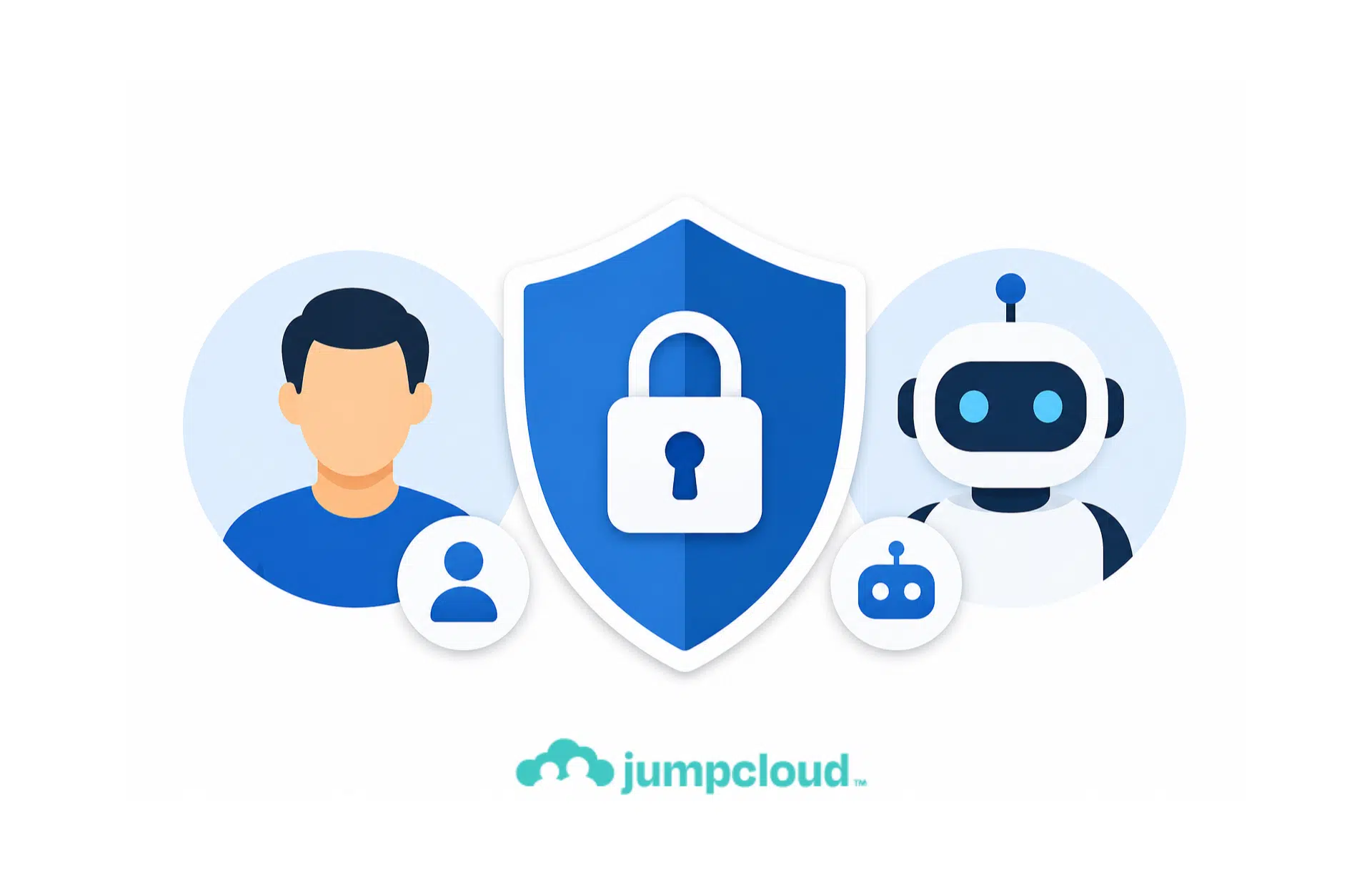
With the growing use of AI agents, non-human identities, or NHIs, are becoming increasingly important. These include service accounts, API keys, tokens, AI agent credentials and automated processes that have access to systems and data.
According to data cited in the JumpCloud IT Trends Report 2026, in 83% of organizations, the number of non-human identities exceeds the number of human users. At the same time, only 21% of organizations have any form of NHI governance in place.
Why is an AI agent an identity?
To operate, an AI agent needs access to specific resources. It may use applications, systems, databases, APIs or other tools. This access requires credentials: API keys, tokens, service accounts or assigned permissions.
From a security perspective, each such access point is a separate identity. This means that an AI agent should be visible, registered, managed and controlled in a similar way to a user in an IAM system.
The challenge is that non-human identities behave differently from people. They do not log in according to a predictable schedule, may remain inactive for long periods and then suddenly become active. They are also often granted broader permissions than they actually need.
The risk of losing control over NHI
A lack of management of non-human identities creates real security risks. Unused tokens, old API keys, forgotten service accounts or AI agent credentials can remain active long after a project has ended.
Each such identity can become an entry point for an attacker. The risk is particularly high in distributed environments, where an organization uses multiple tools, SaaS applications, cloud systems and local IT resources.
If IT teams do not have a single view of all identities, it is difficult to determine which accounts are active, who owns them, what permissions they have and whether they are still needed.
AI agent autonomy is growing
Another challenge is the increasing autonomy of AI agents. According to JumpCloud data, six months ago, 40% of organizations required human review before an AI agent could perform a high-risk action. Today, that figure has dropped to 25%.
At the same time, the share of organizations using fully autonomous agents with no checkpoints, approvals or human review increased from 11% to 26%.
AI agent autonomy is not a problem in itself. It is one of the reasons organizations deploy agentic AI. The problem appears when autonomy is not combined with proper identity management, permissions control and activity monitoring.
IAM must cover both people and AI agents
Identity and Access Management remains the foundation of access control. Agentic AI does not change this principle, but it significantly increases its importance.
If an AI agent can perform an action in a system, modify data, start a process or access information, its identity should be managed in an organized way.
This means that AI agents should be covered by the same principles applied to other identities: registration, ownership, scope of permissions, access reviews, credential rotation and removal of inactive accounts.
Five stages of managing non-human identities
The first step is discovering all non-human identities in the organization. This includes API keys, tokens, service accounts, AI agent credentials and automated processes.
The second step is registering these identities in a central system. Each identity should have an assigned owner, a description of its purpose and a defined scope of access.
The third step is lifecycle management. This includes credential rotation, permission reviews, reducing excessive access and automatically removing inactive credentials.
The fourth step is governance, which means defining rules of operation. The organization should know what each identity is allowed to do, which activities are normal and which should trigger an alert.
The fifth step is unifying management. Human and non-human identities should be visible in one IAM system, so that IT and security teams have a complete picture of access to resources.
Visibility as a condition for secure AI
Agentic AI can accelerate business and technical processes, but it requires appropriate control. Every AI agent with access to systems is an identity, credential it uses is a potential access point, very action it performs independently is an event that should be traceable.
That is why managing non-human identities should not be treated as a project for later. It should be part of the core security architecture before scaling the use of AI agents.
Organizations that deploy agentic AI without visibility and control over NHI increase their risk with every new agent, token and service account. Organizations that treat IAM as a foundation can develop their use of AI in a safer, more controlled and scalable way.
Non-human identities are becoming one of the key areas of security in the era of agentic AI. Without controlling them, an organization is not managing risk — it is only assuming that the risk remains under control.