

27 Feb Out-of-Band Management as a Key Element of NIS2 Compliance and Cyber-Resilience
Why Access to Infrastructure During an Outage Is Critical Today
In a world of increasing cyberattacks, growing regulatory requirements, and a strong dependence of businesses on the continuity of IT and OT systems, organizations can no longer afford to lose control over their infrastructure — even for a few minutes. The NIS2 Directive emphasizes the need to ensure operational resilience, incident response capability, and business continuity.
But what happens when the production network stops working — and that very network is required to manage and restore the infrastructure?
This is a classic operational paradox: when the network fails, we lose the ability to recover it.
This is where Out-of-Band Management comes into play — a key component of modern security architecture and NIS2 compliance.
What Is Out-of-Band Management and Why It Matters for NIS2
Out-of-Band Management is a physically and logically separated management path for infrastructure that operates independently of the production network.
In the context of NIS2, this means:
-
administrative access during an incident
-
the ability to restore systems after a failure
-
secure infrastructure management
-
isolation of administrative operations
-
support for business continuity
This approach aligns with the concept of an Isolated Management Infrastructure recommended by security organizations, including CISA.
Out-of-Band Is Not Just Emergency Access
Many organizations treat OOB as a disaster-only solution. In practice, modern Out-of-Band serves an operational role every day.

Rozwiązanie out-of-band firmy ZPE Systems opiera się na najlepszej praktyce Isolated Management Infrastructure (rekomendowanej przez CISA BOD 23-02 w zakresie bezpieczeństwa), która zapewnia administratorom dedykowane środowisko zarówno do odzyskiwania systemów po awariach, jak i do wykonywania rutynowych zmian.
Compliance with NIS2 and SLA
Minimization of downtime and regulatory risk.
Secure management without exposing the production network
An isolated path reduces the risk of errors and attacks.
Increased cyber resilience of the organization
Infrastructure remains accessible even during a failure or cyberattack.
Simplified management infrastructure
Consolidation of multiple tools into a single platform.
Why Implementing ZPE Systems Solutions with Kappa Data Makes Sense
Implementing Out-of-Band Management with Kappa Data is not just about technology, but about supporting the entire project process. We provide specialized presales support, architectural consulting, and assistance in selecting the right deployment scenario tailored to NIS2 requirements and the customer’s environment. We support partners during the design phase, testing, PoC, and deployment, helping them build a stable, secure, and regulation-compliant management infrastructure. By combining ZPE technology with Kappa Data’s expertise, organizations can achieve cyber resilience faster, enhance operational security, and simplify the management of critical infrastructure.
Why Serial Port Access Still Matters
In environments driven by SDN, automation, and cloud technologies, serial ports may seem outdated — yet they remain the most reliable method for regaining access to infrastructure.
Why the serial console is still critical:
-
direct low-level access to devices
-
independence from the production network
-
the ability to recover systems after a critical failure
-
a proven method in ISP, OT, and critical infrastructure environments
Ignoring this layer means losing the most reliable recovery path for infrastructure.
OOB as Part of a Zero Trust and Cyber Resilience Architecture
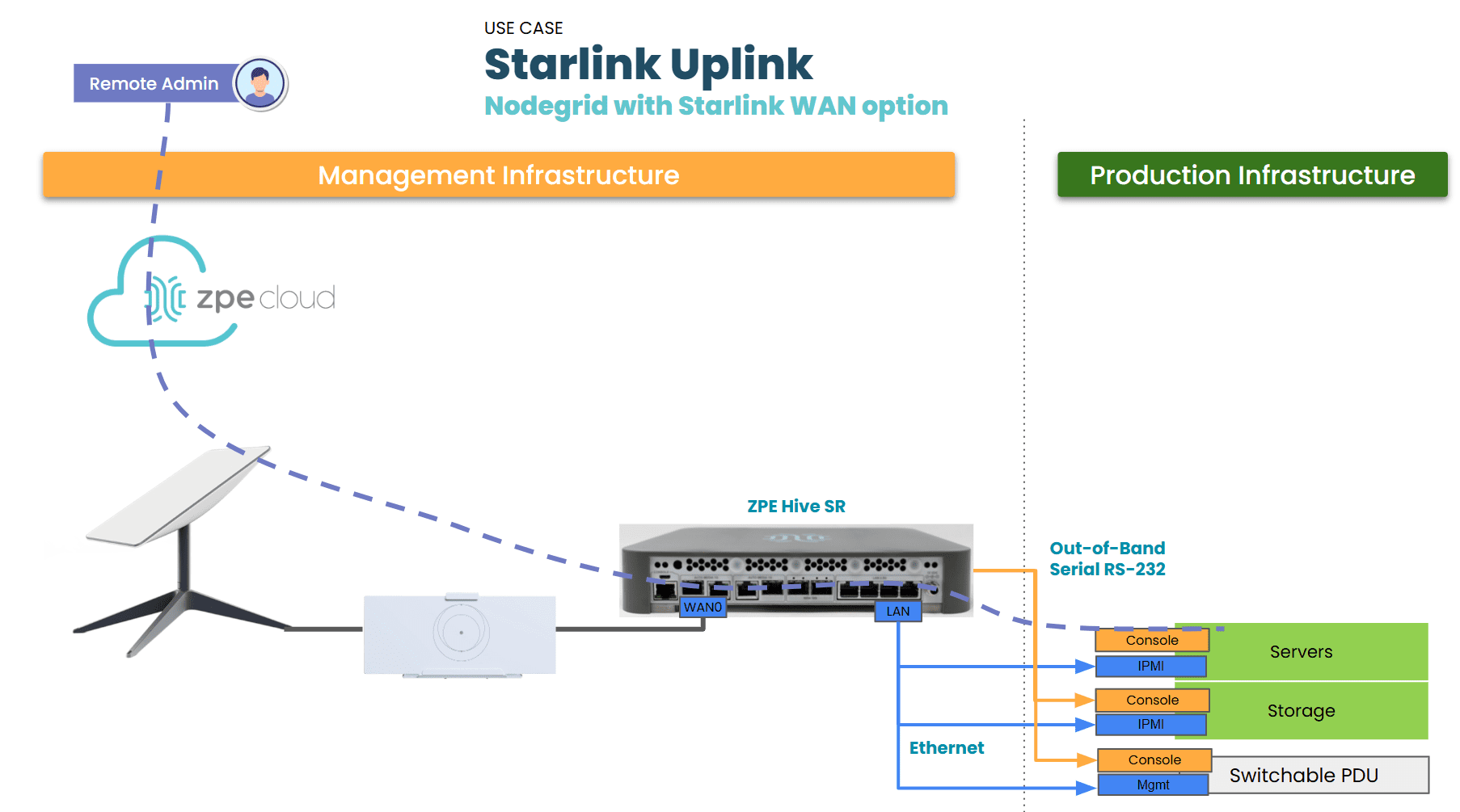
Urządzenia Nodegrid firmy ZPE mogą wykorzystywać łączność 4G/5G lub Starlink do zdalnego dostępu, a sieć out-of-band można uruchomić w czasie krótszym niż jedna godzina.
Modern Out-of-Band solutions integrate:
-
physical and logical isolation
-
Zero Trust–aligned access control
-
enterprise-grade encryption
-
role-based access and the principle of least privilege
-
full auditability of actions
As a result, OOB does not introduce additional risk but instead provides a secure and controlled management layer.
Modern OOB leverages alternative connectivity channels such as:
-
LTE and 5G
-
satellite networks
-
dedicated management networks
This ensures infrastructure access even when:
-
the production network is down
-
a cyberattack is in progress
-
a configuration error has occurred
-
the system requires a rollback
This forms the foundation of the operational resilience required by NIS2.
Summary
In the era of NIS2 regulations, increasing cyber threats, and growing dependence on IT and OT infrastructure, Out-of-Band Management is no longer optional — it is becoming a standard element of security architecture.
It is not only a disaster recovery tool, but also:
-
a foundation of cyber resilience
-
support for NIS2 compliance
-
a secure management layer
-
an operational tool used every day
This is why organizations implement isolated management infrastructure — gaining stability, security, and the ability to operate even when other systems fail.