14 May Discover how Wi-Fi 7 and RUCKUS
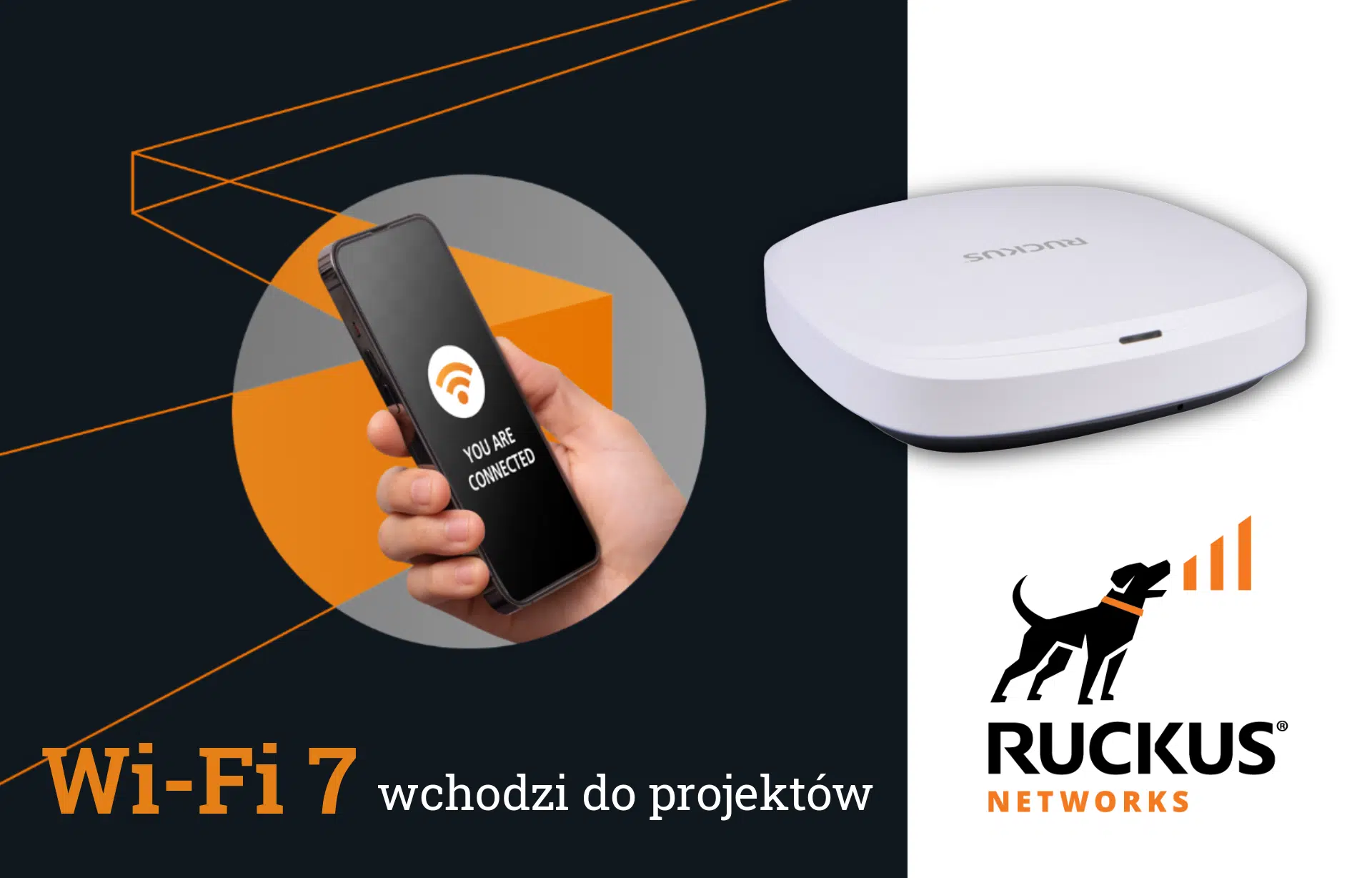
Wi-Fi 7 is entering real-world deployments and changing the way organizations talk about wireless networking. It is no longer only about higher throughput, but also about operational stability, predictability, and the ability to manage infrastructure across multiple locations. Combined with the RUCKUS Networks platform RUCKUS One, this creates new design and service opportunities for partners.
The Wi-Fi 7 standard (IEEE 802.11be) introduces several important changes that directly impact real network performance. Multi-Link Operation (MLO) allows devices to use multiple bands simultaneously, improving connection stability and reducing latency. Support for 4K QAM and 320 MHz channels in the 6 GHz band increases spectrum efficiency, while the Preamble Puncturing mechanism enables networks to bypass interfered channel fragments without giving up the entire channel.
These changes address the real needs of environments where the number of connected devices continues to grow and expectations around connection quality are constantly increasing. Today, wireless networks support not only laptops and smartphones, but also IoT systems, surveillance, video communication, and real-time applications. In such environments, not only performance but also stability under heavy load becomes critical.
Within the RUCKUS Networks portfolio, this approach is visible both at the hardware and management levels. RUCKUS R770 is a Wi-Fi 7 access point designed for high-density environments with demanding performance requirements. RUCKUS R670 addresses deployments in smaller spaces such as conference rooms, classrooms, or hotel rooms. As a result, the conversation around Wi-Fi 7 is no longer limited to large-scale projects, but also includes modernization of existing wireless networks in a more accessible way.
One of the distinguishing features of RUCKUS Networks technology remains BeamFlex+, an adaptive antenna system. The access point dynamically adjusts signal characteristics to radio conditions and the specific client device, resulting in better connection quality and greater network stability. This patented RUCKUS Networks technology is not available from competitors, and in high-density environments it delivers measurable results: more stable connections, improved real-time application performance, and lower coverage costs.